
Title: “Breaking Barriers: Embracing Inclusivity in Fitness – Part 1”
Introduction: Welcome to this episode in which we explore the topic of inclusivity in the fitness industry. In this first part, we discuss the challenges faced by individuals with disabilities, shedding light on the experiences of both Sarah Bolitho and Sarah Park. Listen in or read on as we uncover the barriers hindering accessibility and the crucial steps needed to make fitness a welcoming space for everyone.
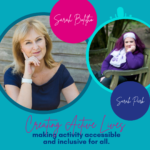
Sarah Bolitho and Sarah Park, are passionate advocates for disability rights and inclusion in the UK. Sarah Park, known as the Disability Diva, shares her journey of gracefully navigating life with a lifelong disability and her commitment to amplifying the voices of disabled individuals.
The Stark Discrepancy in Fitness Participation
Sarah Bolitho raises a critical point: despite around 24% of the UK population having a disability, a staggering 43% of disabled individuals remain inactive, double the percentage of their non-disabled counterparts. Sarah and Sarah aim to unravel the reasons behind this stark discrepancy and, more importantly, explore actionable solutions.
Accessibility vs. Inclusivity: A Vital Distinction
One key issue revolves around the difference between accessibility and inclusivity. While physical accessibility is crucial, Sarah Park emphasizes the need for a shift in attitude and customer service to make facilities and services more inclusive and publicise their inclusive practices more widely. The discussion hints at a broader perspective, touching on the need for wider societal changes, business practices, and the role of the fitness industry in promoting a more inclusive environment as well as an accessible one. There is little benefit in having physically accessible facilities, if there are no qualified or experienced staff to work with disabled clients in the gym or studio.
Personal Experiences: The Catalyst for Passion
Sarah Park shares her struggles with participating in everyday fitness activities. She has encountered indifferent attitudes and inadequate facilities, and this has fueled her passion for advocating change. The podcast details instances where positive experiences with proactive trainers contrast sharply with less accommodating environments, emphasizing the need for a shift in mindset.
Anticipating Needs, Not Just Reacting
Sarah Bolitho underscores a prevalent issue – the reactive nature of businesses towards inclusivity. Instead of waiting for a problem to arise as is common practice, both Sarahs advocate for a proactive approach, urging fitness centres to anticipate the needs of disabled individuals. This involves collaboration with disability groups, consultation exercises, and actively seeking feedback emerge as crucial steps in fostering a genuinely inclusive fitness environment.
Preparing for Sport: A Vital Step Towards Inclusivity
Sarah Bolitho and Sarah Park highlight a crucial aspect often overlooked in the fitness industry – the need for tailored preparation for sports. While wheelchair basketball and rugby are growing in popularity, there’s a gap in fitness and coaching programs designed to help individuals build the strength and stamina required before they start these sports. The series advocates for more initiatives like “Get Fit for Wheelchair Basketball” and “Get Fit for Wheelchair Rugby” to bridge this gap, making sports more accessible to a broader audience.
Inclusive Opportunities Close to Home
The episode also emphasises the importance of local opportunities, particularly in leisure centres with ample space. Sarah Bolitho underlines the need for fitness facilities to engage with their communities proactively. By offering tailored programs and consultations, centres can actively involve individuals with disabilities in planning, ensuring that the activities and facilities meet their needs and preferences.
Communication: The Key to Successful Inclusivity
Sarah Park shares her experiences in approaching fitness venues and highlights the significance of proactive communication. Fitness facilities must reach out to diverse communities, seek advice, and actively work on making their spaces more accessible and more inclusive. Rather than waiting for individuals with disabilities to suggest changes, fitness centres should take the initiative, fostering a sense of inclusivity from the very beginning.
Dispel Misconceptions, Recognize Abilities
Also addressed are prevalent misconceptions about individuals with disabilities. Sarah Park emphasises the need to dispel assumptions about capabilities, as many people underestimate the abilities of those with disabilities. The episode encourages fitness professionals to treat each client as an individual, focusing on their strengths and capabilities rather than making assumptions based on their physical condition or disability.
The Power of Word of Mouth and Positive PR
Sarah Bolitho and Sarah Park discuss the impact of positive word of mouth in promoting inclusivity. They stress the importance of fitness centres actively sharing their accessible facilities and inclusive programs through various channels, including social media, websites, and local press. Positive experiences and proactive inclusivity efforts can create a ripple effect, attracting more individuals to participate in fitness activities.
A Call to Action for Fitness Facilities
We conclude with a call to action for fitness facilities. Sarah Park urges businesses to be proactive, seek advice, and engage in ongoing communication with diverse communities. The key is to create an environment where everyone feels valued, supported, and included. The blog encourages fitness facilities to lead in promoting inclusivity, challenging misconceptions, and actively working towards making fitness a welcoming space for all.
Recent Comments